
8 Best Countries for Tax-Efficient Business Expansion in 2027

Modern tech, SaaS, and borderless businesses don't shut down their domestic company (e.g., Delaware C-Corp or UK Ltd) to move offshore. Instead, they spin up a specialized international operating entity or IP subsidiary to access incentives.
For companies considering an additional entity, the challenge is finding a jurisdiction that fits their expansion plans without creating unnecessary complexity. Some destinations offer established international business infrastructure, while others, including Próspera, Zanzibar, and Itana, provide specialized economic-zone frameworks worth exploring.
This guide compares eight jurisdictions for tax-efficient business expansion, examining their tax rules, formation costs, eligibility requirements, and business advantages to help you identify the options most relevant to your goals.
Key Takeaways
- Entity layering allows founders to keep existing domestic entities while running eligible international revenue through specialized digital free zones at 0%–5% corporate rates.
- Próspera, Zanzibar, and Itana offer distinct economic-zone frameworks for eligible businesses.
- Tools For The Commons (TFTC) handles incorporation, payments, invoicing, and ongoing cross-border governance in next-generation free zones.
- An additional foreign entity can support international expansion while your existing business continues operating.
8 Best Countries for Tax-Efficient Business Expansion
1. Honduras: Próspera ZEDE
Ideal For: High-margin SaaS, Web3 projects, digital agencies, and research ventures with low direct cost of goods sold.
Próspera ZEDE on Roatán Island provides a digital-first regulatory sandbox built for international technology ventures and intellectual property management. Rather than replacing an existing parent entity, founders can establish a Próspera subsidiary alongside their Delaware or European company to isolate and protect global revenue under common-law legal standards.
Key Advantages
- 1% Effective Business Tax: Applies a simplified 10% rate on a presumed 10% gross revenue base, eliminating complex audit overhead.
- Regulatory Flexibility: Businesses can elect tailored common-law frameworks (including US standards) to govern commercial contracts and IP
Let’s say an international software consultancy earns $600,000 in gross revenue from cross-border clients. Under Próspera’s 1% effective gross model, its local business tax is $6,000. Compared to traditional corporate jurisdictions charging 20%–30% on taxable earnings, this leaves tens of thousands of dollars in preserved capital directly inside the business to fund development and hiring.
Company Formation and Operational Costs via Tools for the Commons
Tools for the Commons (TFTC), founders can incorporate and manage their Próspera entity entirely online:
- Setup Fee: $150 (initial company formation).
- Annual Subscription: $229 per year.
Incorporating through TFTC connects your entity directly to an operational dashboard providing multi-currency transaction tracking, automated invoicing, and digital payment infrastructure.
Considerations
Designed for international foreign-source income. Businesses selling physical goods within mainland Honduras face standard domestic commercial rules.
Verdict
Próspera delivers high regulatory adaptability paired with an unbeatable 1% gross tax model, managed completely online through TFTC’s low-cost annual suite
Explore Próspera Company Formation with Tools for the Commons
2. Tanzania: Zanzibar Digital Free Zone
Ideal For: Digital agencies, media companies, and remote teams with moderate-to-high operational expenses that prioritize net profit deductions
Zanzibar's Digital Free Zone is a tax-advantaged operational hub tailored for borderless digital operations. Unlike gross-revenue frameworks, Zanzibar taxes qualifying net income, making it an effective satellite entity for consultancies, agencies, and tech scale-ups that run significant contractor and software overhead.
Key Advantages
- 5% Net Corporate Tax: Applied strictly to net taxable profit after legitimate business expenses are deducted.
- Full Expense Deductibility: Server costs, international contractor payroll, and ad spend offset gross revenue before tax is calculated.
For instance, a cross-border agency earns $800,000 in gross revenue while incurring $500,000 in deductible operating expenses, including payroll, software licences, and advertising. Under Zanzibar’s 5% net-income tax model, the remaining $300,000 in qualifying net income would result in a tax liability of $15,000.
Compared with a 25%–30% tax rate on the same taxable amount, this would represent a potential tax difference of 60,000–75,000, assuming the income qualifies and the comparison is applicable.
Formation & Ongoing Costs via Tools for the Commons (TFTC)
- Single Shareholder: $20 setup | $20/month
- 2–5 Shareholders: $50 setup | $50/month
- 6–50 Shareholders: $1,000 setup | $100/month
TFTC provides unified digital management, handling zone licensing, registered office services, invoicing, and ongoing compliance filings in one platform.
Considerations
Best suited for international digital activities; transactions within the local domestic Tanzanian customs territory are subject to domestic taxes.
Verdict
For businesses with significant operational costs, Zanzibar combines net-profit tax efficiency with accessible, pay-as-you-go pricing starting at $20/month via TFTC.
3. Nigeria: Itana Digital Economic Zone
Ideal For: SaaS companies, fintechs, enterprise digital providers, and pan-African tech platforms requiring a legally insulated regional presence.
Itana is Africa’s first specialized digital economic zone, purposefully engineered for tech startups, remote-first teams, and international businesses expanding into high-growth African markets. Operating an Itana entity allows founders to tap into regional talent and market upside without the regulatory frictions of standard onshore domestic incorporation.
Key Advantages
- 0% Corporate Tax & VAT Exemptions: Qualifying foreign-source income and zone transactions are completely exempt from corporate income tax and VAT.
- 100% Foreign Capital Repatriation: Full legal freedom to hold, invoice, and move funds in foreign currencies (USD) without mandatory local equity partners.
Let’s say a foreign software firm earns $300,000 in qualifying profit servicing regional and international enterprise clients. In Itana, this income faces 0% corporate income tax, saving up to $90,000 when contrasted with Nigeria’s standard 30% onshore corporate rate. All earnings can be held and transferred abroad in hard currency without onshore conversion limits.
Formation & Ongoing Costs via Tools for the Commons (TFTC)
- Setup Fee: $1,035
- Recurring Cost: $1,265/year subscription
TFTC handles end-to-end free-zone registration, compliance reporting, statutory registered agent services, and administrative tooling via a secure web portal.
Considerations
Tax exemptions apply specifically to qualifying export and free-zone transactions; operations within Nigeria's domestic customs territory require standard local tax reporting.
Verdict
Itana combines 0% corporate tax incentives with unrestricted foreign currency management, offering international tech companies the premier launchpad for African expansion via TFTC.
4. Dubai, UAE
Ideal For: Well-capitalized enterprises, import/export operations, and firms needing a physical corporate presence in the GCC.
Dubai remains an international commercial heavyweight, offering world-class infrastructure and direct market access across the Middle East, North Africa, and South Asia. It serves large companies seeking a physical regional base, prestigious commercial banking relationships, and established free-zone logistics.
Key Advantages
- 0% Qualifying Free Zone Rate: Available on eligible corporate income, with standard non-qualifying business profits taxed at 9%.
- Global Commercial Hub: Unrivaled logistics, double-taxation treaties, and mature international banking networks.
Accessing the 0% tax rate requires qualifying as a Qualifying Free Zone Person (QFZP). This demands strict economic substance like commercial office space leases, local resident personnel, and mandatory annual audited financial accounts. Between recurring trade licenses, establishment cards, and compliance retainers, annual maintenance typically ranges from $5,000 to $15,000+, regardless of revenue.
Set Up Cost & Other Fees
- Setup Costs: Varies widely by free zone, typically $4,000–10,000 upfront.
- Annual Maintenance: High; recurring license renewals, mandatory physical/flexi-desk leases, and registered audit fees.
Considerations
Excessive annual overhead and strict substance hurdles make it cost-prohibitive for early-stage or lean digital businesses.
Verdict
Dubai offers unmatched corporate prestige and trade connectivity, but its high administrative overhead is better suited for mature enterprises than lean digital-first operations.
5. Singapore
Ideal For: Institutional scale-ups, fintechs, and regional headquarters targeting major Asian commercial partnerships.
Singapore is one of the world's premier financial centers, renowned for its transparent legal framework, intellectual property enforcement, and direct gateway into Asian markets. For established technology companies seeking institutional venture capital or preparing for major regional contracts, it provides gold-standard credibility.
Key Advantages
- Tiered Tax Exemptions: Standard corporate tax is 17%, but partial tax exemption schemes significantly lower the effective rate on the first S$200,000 of chargeable income for eligible businesses.
- Institutional Credibility: World-class dispute resolution, strong intellectual property laws, and immediate recognition by institutional investors.
Market Realities & Ongoing Fees
- Setup Costs: S$1,000–S$2,500.
- Annual Maintenance: Moderate to high; recurring fees for local resident director services, corporate secretarial filings, and standard annual reporting.
While Singapore is essential for fundraising and Asian footprint, a 17% headline tax and required resident directorship make it an expensive holding vehicle compared to a specialized digital zone like Próspera (1% effective tax) or Zanzibar (5% net tax).
Considerations
Singapore company law mandates that every private limited company must appoint at least one locally resident director (a Singapore citizen, permanent resident, or EntrePass holder).
A 17% corporate rate and mandatory local resident directorship requirements create significant ongoing friction for lean, cross-border businesses.
Verdict
Singapore remains the top choice for institutional credibility and Asian market access, provided your margins can comfortably absorb a 17% corporate tax rate and mandatory local directorship costs.
6. Estonia
Ideal For: Remote European founders, software scale-ups retaining profits for multi-year R&D, and digital sellers requiring an EU VAT identity.
Estonia’s e-Residency and fully digitized registry have made it a favorite for solo digital entrepreneurs seeking European single-market access. Its headline feature is a deferred corporate taxation model that allows growing companies to reinvest 100% of their operational gains without immediate corporate income tax.
Key Advantages
- 0% Corporate Tax on Retained Profits: Undistributed business profits reinvested back into the business remain completely untaxed until distribution.
- 100% Digital Public Services: Routine corporate administration, filings, and EU VAT management can be handled entirely online.
Set Up Cost & Other Fees
- Setup Costs: ~€265 state fee, plus e-Residency card issuance (€120–€150).
- Annual Maintenance: €500–€1,500 annually for a mandatory licensed local contact person, registered legal address, and monthly accounting services.
Estonia is effective for retaining capital within the European ecosystem. However, founders taking regular operational profit distributions achieve far better margin retention through Zanzibar's 5% net tax model or Próspera's 1% gross model.
Considerations
Estonia is frequently mischaracterized as a low-tax haven. However, e-Residency does not grant personal tax residency. The moment a founder distributes profits as dividends, Estonia levies a 22% corporate income tax rate on distributed earnings.
Verdict
Estonia is a practical option for European digital administration and capital reinvestment, but the 22% dividend distribution tax removes its appeal for founders seeking immediate corporate tax efficiency.
7. Mauritius
Ideal For: Fund managers, holding structures with heavy dividend flows, and cross-border financing vehicles targeting African infrastructure.
Mauritius has long served as a treaty-rich financial hub connecting foreign capital to South Asia and Sub-Saharan Africa. For private equity funds, asset managers, and cross-border holding companies, its double-taxation avoidance agreements (DTAAs) make it a structured conduit for international capital routing.
Key Advantages
- 80% Partial Exemption Regime: While the standard corporate tax rate is 15%, eligible foreign income streams (such as foreign dividends and specified financial services) can qualify for an 80% exemption, resulting in an effective 3% corporate rate.
- Robust DTAA Network: Extensive double-taxation avoidance treaties throughout Africa and Asia that significantly reduce international withholding taxes.
Set Up Cost & Other Fees
- Setup Costs: 2,500–5,000+ depending on the licensed management provider and license tier.
- Annual Maintenance: Substantial; recurring management company retainers, resident directorship fees, local auditing, and FSC licensing fees.
For institutional investment funds, Mauritius justifies its cost. But for tech platforms and SaaS scale-ups expanding into Africa, Itana provides a more modern alternative: 0% corporate tax on qualifying operations without heavy local management agency retainers.
Considerations
GBL substance tests, mandatory local management company administration, and statutory audit obligations make it unnecessarily heavy for software and digital services.
Verdict
Mauritius is a powerhouse for structured investment funds and holding entities, but its costly management company requirements make modern digital free zones a lighter, faster choice for operating tech businesses.
8. Georgia
Georgia has emerged as an attractive, accessible base for independent entrepreneurs and remote workers due to its simple bureaucracy, fast incorporation, and territorial-style corporate tax structure. It allows entrepreneurs to establish an Eastern European base quickly without extensive startup capital.
Key Advantages
- Estonian-Style Corporate Tax Model: Corporate income tax applies at 15% strictly upon profit distribution, leaving reinvested capital untaxed within the company.
- Accessible Entry: Modest state registration fees and minimal statutory capitalization requirements simplify early-stage setup.
Set Up Cost & Other Fees
- Setup Costs: Low; modest official state filing fees and bilingual power-of-attorney registration packages (300–1,000).
- Annual Maintenance: Low to moderate; basic local accounting retainers and registered address services (600–1,500/year).
While Georgia provides an inexpensive corporate entry point, incorporated businesses cannot access the headline 1% rate. For tech companies and expanding digital ventures, Próspera’s published 1% corporate model or Zanzibar's 5% net tax structure offer formal entity protection with superior long-term tax predictability.
Considerations
Incorporated companies pay 15% on distributed earnings, banking access for foreign-owned entities has tightened, and the 1% flat rate does not apply to scalable corporate entities.
Verdict
Georgia is an accessible, budget-friendly jurisdiction for independent contractors, but growing corporate businesses face standard 15% distribution taxes that lack the true advantages of dedicated digital free zones.
How to Choose the Right Jurisdiction for Your Business
Consider these factors before choosing a jurisdiction:
- Tax: Rates, incentives, eligibility, and home-country obligations.
- Market access: Proximity to target customers and suppliers.
- Costs: Registration, licensing, and ongoing compliance.
- Legal requirements: Ownership rules, directors, and reporting.
- Banking: Access to suitable banks and payment providers.
- Stability: Regulatory certainty and recognition of your company structure.
The right choice starts with identifying your business objectives and matching them to the jurisdiction's framework.
Before incorporating, review the relevant rules with a qualified tax adviser to understand how the new entity may affect your existing business and cross-border obligations.
Can You Expand Internationally Without Replacing Your Existing Company?
Expanding into a new jurisdiction does not require closing your primary business or moving offshore.
Modern cross-border companies use entity layering. That is, keeping an existing domestic holding company (like a Delaware LLC or UK Ltd) while spinning up an additional operating arm in a specialized digital free zone.
Why Layer an Additional Entity?
- Preserve Domestic Equity: Keep your core parent company unchanged for investor relations, US banking, and domestic revenue.
- Optimize International Earnings: Route eligible global SaaS, agency, or consulting sales through an operating entity in Próspera (1% gross tax) or Zanzibar (5% net tax).
- Enter Emerging Markets: Establish a compliant, dollar-denominated gateway into Africa via Itana with 0% corporate income tax on qualifying export profits.
- Avoid Restructuring Overhead: Add a lightweight subsidiary without costly corporate migrations or disrupting current operations.
For example, a Delaware software firm generating $800k in foreign sales keeps its US company for domestic enterprise deals, but opens a Zanzibar entity to handle international client billing and contractor payroll. It legally taxes eligible foreign profit at 5% instead of 21%+ domestically, retaining significant capital to reinvest in growth.
Centralized Control via Tools for the Commons (TFTC)
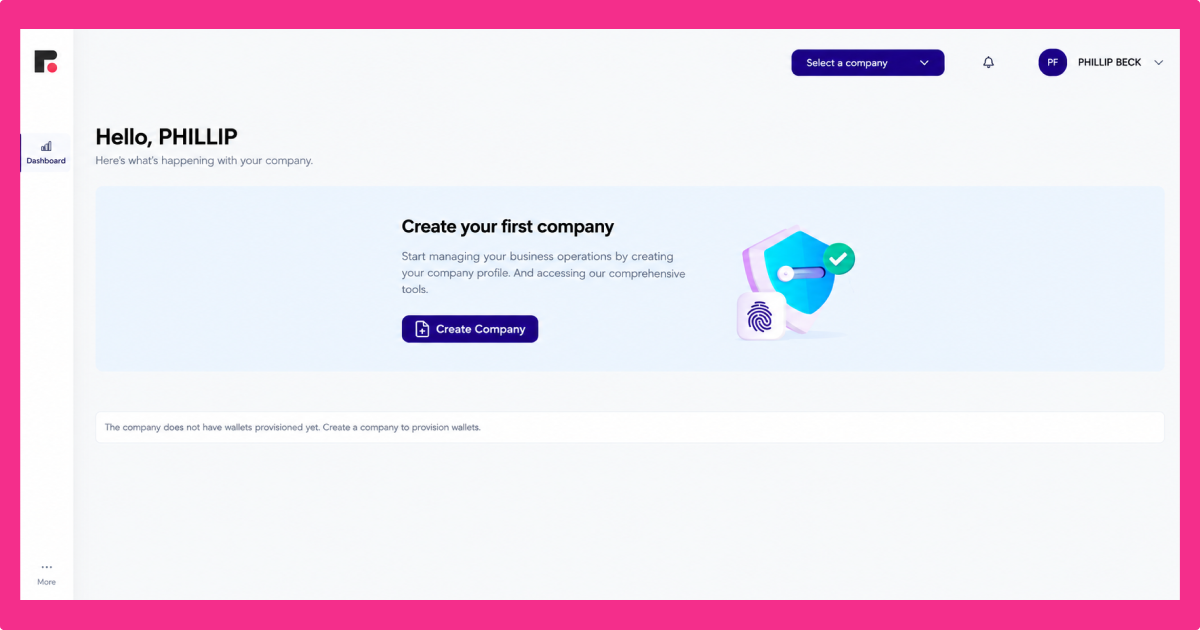
Managing multiple entities across borders does not require separate foreign law firms. Through Tools for the Commons (TFTC), founders can form and run entities in Próspera, Zanzibar, and Itana from a single digital dashboard. You can handle registered agents, compliance filings, invoicing, and multicurrency transaction tracking in one place.
Explore Multi-Entity Expansion with Tools For The Commons.
Frequently Asked Questions
What is the cheapest country to incorporate a company?
Georgia and Estonia offer relatively accessible initial registration costs, but ongoing administration and tax treatment also affect the total cost of operating a company. Through Tools for the Commons (TFTC), Zanzibar formation pricing starts at $20 for setup and $20 per month for a single-shareholder company, with higher tiers for companies with more shareholders.
Does incorporating abroad automatically reduce my taxes?
No. Setting up a foreign entity does not override personal tax residency or home-country cross-border rules. Tax advantages only apply when the entity handles legitimate foreign-source income and operational activities. Always consult a qualified international tax adviser.
Can an entity in Próspera, Zanzibar, or Itana access international business banking and payment gateways?
Yes. These are legally recognized entities that can open accounts with international fintechs and payment processors. Tools for the Commons also integrates direct invoicing, multi-currency transaction tracking, and cross-border payment tools into your entity dashboard.
How can TFTC help me establish a company internationally?
TFTC is an end-to-end platform for forming and running entities in Próspera, Zanzibar, and Itana. Beyond filing registration documents, it manages ongoing compliance, statutory renewals, digital invoicing, and multi-currency operations in one place.
How does a dual-entity structure work with an existing US or UK company?
You keep your existing US or UK company to hold equity, manage domestic clients, and protect your cap table. Concurrently, you set up a subsidiary in Próspera, Zanzibar, or Itana to service international clients, hire global talent, or license IP. Legally channeling eligible foreign earnings into a 0%–5% tax framework without disrupting your parent entity.
