
Próspera vs Dubai Free Zones: Costs, Taxes and Benefits
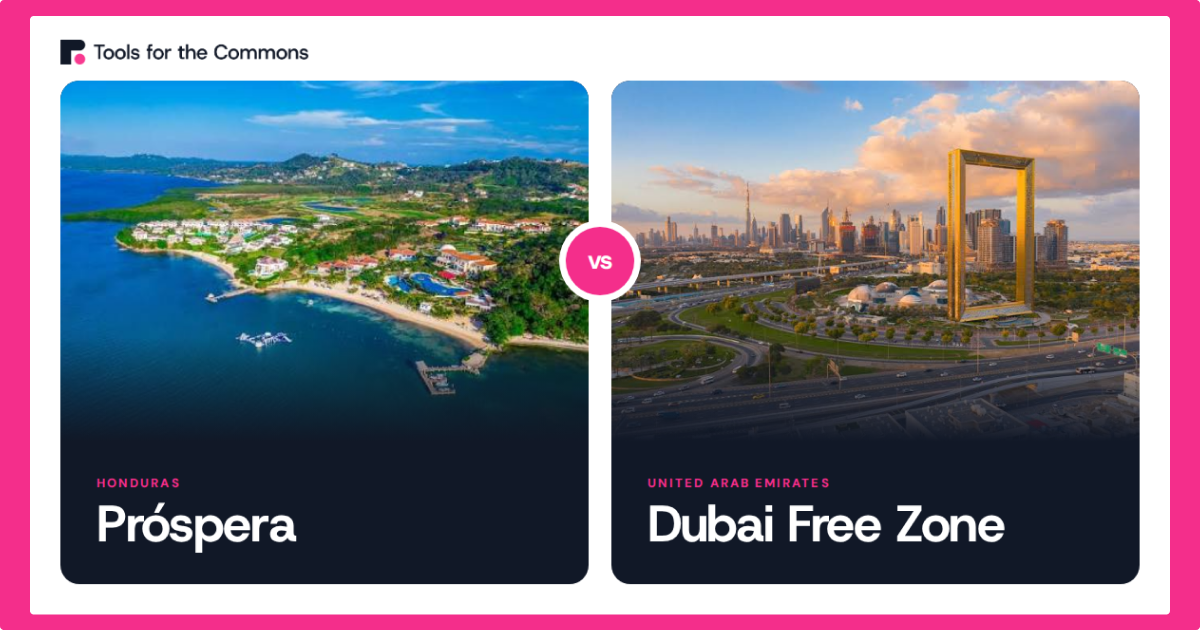
When expanding internationally, an established business may consider setting up an additional entity in another jurisdiction. Próspera and Dubai free zones are two options, but each comes with its own tax rules, formation costs and operating requirements. Before choosing either, businesses need to assess how much the entity will cost to establish and maintain, what taxes it may owe, and what compliance obligations apply.
This comparison looks at the tax treatment, setup and ongoing costs, regulatory requirements, and operational considerations for both jurisdictions.
Key Takeaways
- Próspera is a single jurisdiction with its own framework, while Dubai is a set of separate free zones.
- Próspera taxes gross income at about 1%, while the UAE taxes profit above AED 375,000 at 9%.
- Dubai’s 0% free zone rate applies only to qualifying income.
- Próspera’s published first-year fees run from $279 to $790+, and a DMCC package costs AED 35,484.
- Substance, audit and residency requirements vary, and Próspera’s legal status is disputed.
Próspera vs Dubai Free Zones at a Glance
How Próspera and Dubai Free Zones Work
If your business is considering an additional entity abroad, Próspera and Dubai offer two different routes. Próspera operates under the ZEDE framework, while Dubai has more than 20 free zones, each managed by its own authority. Your choice will affect where you can operate, which activities you can license, and what you need to establish the company.
Setting Up a Company in Próspera
1. Assess the legal framework before committing.
Próspera was established under Honduras's ZEDE law. Honduras repealed the law in 2022, and its Supreme Court declared the framework unconstitutional in 2024. Próspera disputes the effect of these actions and continues to operate. Its dispute with Honduras is the subject of an ICSID arbitration. Businesses considering registration should assess this legal uncertainty with independent counsel.
2. Check your eligibility and company structure.
You can establish an LLC or corporation or register an existing foreign entity. Applicants must hold Próspera e-Residency or Residency, or appoint a legal representative who does. Confirm which structure and registration route fit your business before applying.
3. Confirm your business activity and registration requirements.
Describe the activities your company intends to carry out and check whether they require additional regulatory approvals or insurance. Tools for the Commons provides a digital registration workflow for Próspera through its DAZ platform.
Setting Up a Company in a Dubai Free Zone
1. Match your business activity to a suitable zone.
Authorities such as DMCC, IFZA, and Dubai South have different sector specializations, permitted activities, fees, and facilities. Compare them against your business model, location needs, and target markets.
2. Choose the right license and legal structure.
Depending on the zone and activity, licenses may cover commercial, industrial, professional, service, e-commerce, or media operations. Available structures include FZE, FZCO, free zone LLC, and branches. Shareholder eligibility and requirements vary by authority.
3. Prepare for registration and ongoing operations.
Check the required documents, name approval, license fees, office arrangements, capital requirements, and visa options with your chosen authority. A free zone licence does not automatically allow unrestricted trading on the UAE mainland.
How Much Does It Cost to Set Up a Company in Próspera vs Dubai?
Company setup costs vary by jurisdiction, business activity, and operating requirements. The breakdown below covers published Próspera fees and examples from Dubai free zones to help businesses estimate their setup and ongoing expenses.
Initial Company Formation Costs
Próspera
Registering a new entity costs $150, compared with $50 for an existing foreign entity. Entity residency costs $130, and a registered agent costs $99–250. This brings the first-year starting cost to $379 for a new entity or $279 for an existing foreign entity. Full-time resident entities must also budget $260 for liability insurance.
Dubai
Costs vary across Dubai's more than 20 free zones. At DMCC, published fees for application, registration, Articles of Association, license, and establishment card total AED 34,185. Its Basic Biz Package is AED 35,484. Lower-cost options include zero-visa packages quoted through IFZA and other free zone partners, starting around AED 12,500–15,000. These are indicative quotes, not universal authority fees.
Annual Fees and Ongoing Expenses
Próspera
Recurring costs include $130 for entity residency, $99-250 for the registered agent, and a $100 annual report from the year after formation. Full-time resident entities also pay $260 annually for liability insurance.
Dubai
At DMCC, the standard trading or service license renewal is AED 20,285, with an additional AED 1,825 for the establishment card. Workspace costs depend on the arrangement, with flexi-desk options listed at AED 16,000–19,000. IFZA and other zones have different renewal and workspace charges.
Additional Costs to Budget For
Próspera
Depending on the business activity, additional insurance may be required. Companies should also budget for external accounting, legal, and tax advice. DAZ transaction fees are separate from Próspera's registration charges.
Dubai
Businesses hiring employees should include visa processing, medical tests, Emirates ID, and health insurance in their budgets. DMCC lists a two-year employee residence visa at AED 2,972.50 for applications made from outside the UAE. Office leases and other employee-related expenses increase the total.
Próspera vs Dubai: How Do Their Tax Systems Compare?
Próspera and Dubai tax business income differently. Próspera applies tax to a portion of gross revenue, while the UAE generally taxes company profits. For businesses comparing both, the distinction affects how much tax they may owe as revenue and margins change.
Corporate Tax in Próspera
Próspera applies a 10% business income tax to 10% of revenue sourced within the jurisdiction, giving an effective rate of 1% on that revenue. The tax is based on gross income, not profit, and is due annually on April 30. Income sourcing is important: cross-border businesses, particularly SaaS and service providers, should establish whether their revenue qualifies as Próspera-derived. Other countries may still tax income connected to their territories.
Corporate Tax in Dubai Free Zones
The UAE's standard corporate tax rate is 0% on taxable profits up to AED 375,000 and 9% above that threshold. Qualifying Free Zone Persons (QFZPs) pay 0% on Qualifying Income and 9% on non-qualifying taxable income. The AED 375,000 threshold does not apply to QFZPs. All free zone companies must register for corporate tax, even if they qualify for the 0% rate.
What Businesses Need to Qualify for Preferential Tax Treatment
Próspera: Businesses must meet applicable residency and registration requirements and assess how their activities and income sources are treated under its territorial tax rules.
Dubai: QFZPs must maintain adequate UAE substance, earn income from qualifying activities, keep non-qualifying revenue within the lower of 5% of total revenue or AED 5 million, comply with transfer-pricing rules, and prepare audited financial statements.
For example, a SaaS company earning $500,000 at a 20% margin would have $5,000 in Próspera business tax if all revenue qualifies as Próspera-derived. Under the standard UAE regime, its $100,000 profit (approximately AED 367,250) falls below the AED 375,000 threshold, resulting in no corporate tax. Its actual Dubai liability could differ if it qualifies as a QFZP.
What Are the Business Benefits of Próspera and Dubai Free Zones?
Legal and Regulatory Framework
Dubai companies operate under UAE federal law and the regulations of their respective free zone authorities, with established compliance requirements and legal channels for resolving disputes. Próspera has its own regulatory framework and arbitration system, but its legal standing under Honduran law remains contested.
Banking and International Payments
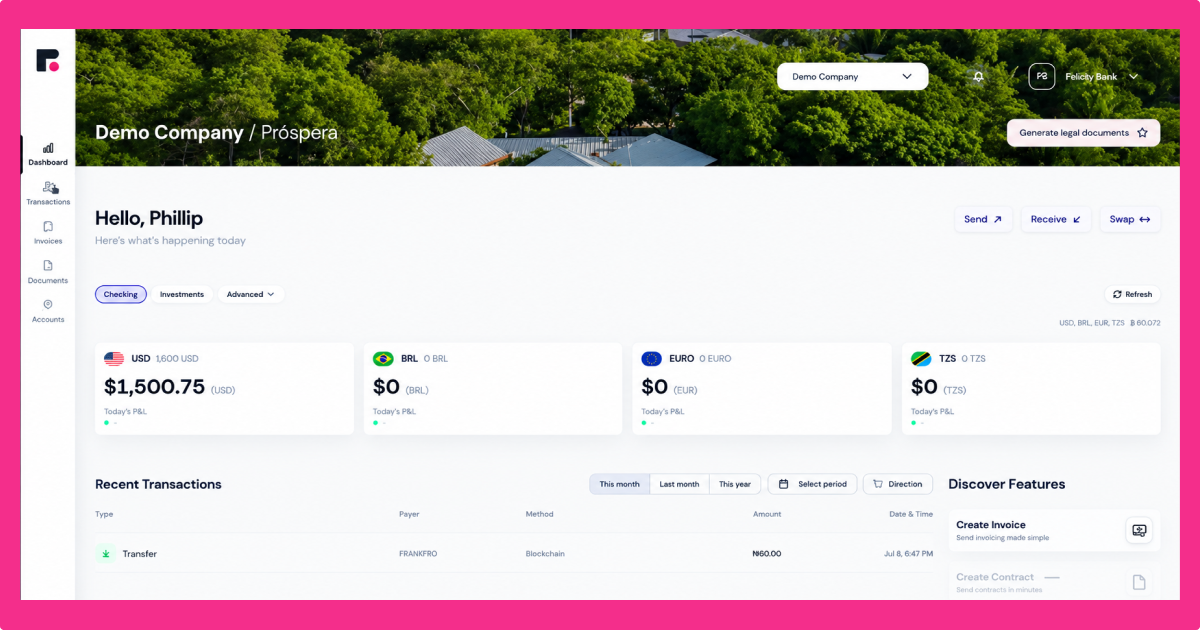
Company registration does not guarantee banking access in either jurisdiction. Próspera lists providers such as OneSafe and PayPal, but account approval and available services depend on each provider. DAZ brings invoicing, balances, transaction history, and payment sending into one dashboard, while access to banking and payment services remains subject to provider approval. UAE banks conduct their own due diligence and may require proof of business activity and operational presence.
Business Activities and Market Access
Dubai free zones offer licenses for specific business activities, allowing companies to serve international customers and, subject to applicable permits and requirements, mainland UAE customers. Próspera is suited to businesses operating across borders, particularly digital and remote service providers, but companies must still meet the rules of the countries where they conduct business.
Ownership, Licensing, and Operational Requirements
Both jurisdictions allow full foreign ownership. Dubai companies must obtain a license covering their approved activities and meet the relevant free zone's office or workspace requirements. In Próspera, company formation involves applicable residency and registered-agent requirements, depending on the chosen structure.
Próspera or Dubai: Which Is Better for Your Business?
The right choice depends on where your customers are, how your business earns revenue, and where you plan to operate. Consider these factors when comparing the two:
- Digital businesses and international service providers: Próspera's tax structure may appeal to location-independent businesses, but income sourcing and tax obligations in other countries need to be assessed. In Dubai, check whether your revenue qualifies for the 0% free zone rate.
- SaaS and technology companies: Compare how each jurisdiction treats your revenue, profit margins, business activities, and customer locations before choosing where to incorporate.
- Founders seeking an additional international entity: Próspera's lower published formation costs may make it worth considering, provided its legal and operational requirements fit your plans.
- Businesses prioritizing access to the UAE market: Dubai may be a better fit for companies building relationships with UAE customers, suppliers, and business partners.
- Companies with employees, offices, or substantial UAE operations: Dubai offers established infrastructure for businesses with a physical presence and teams based in the region.
- Businesses seeking a different legal and regulatory framework: Próspera offers an alternative common-law framework, but its contested legal standing under Honduran law should form part of the assessment.
Before incorporating, seek independent legal and tax advice in your home country and the jurisdiction you are considering.
Can You Keep Your Existing Company and Set Up Another in Próspera or Dubai?
Yes. Businesses can retain their existing company and establish another in Próspera or Dubai to serve international customers, enter new markets, work with overseas partners, or manage cross-border operations.
The two entities may operate separately, but transactions between them can trigger transfer-pricing and reporting requirements. Tax authorities may also consider where each company is managed and controlled when determining tax residency.
Incorporating abroad does not automatically reduce tax or remove obligations in the company's existing jurisdiction. Founders may still have tax and reporting responsibilities in their home country.
Setting Up a Business in Próspera with Tools for the Commons
Tools for the Commons supports businesses looking to establish an entity in Próspera and manage their operations internationally. Its flagship platform, DAZ, provides a digital route to company registration and ongoing business management. Businesses can use it to access a central dashboard, create invoices, track account balances and transaction history, and send payments.
By bringing registration and these management tools together, DAZ gives businesses a central place to handle key activities after incorporation.
If you're considering setting up an international entity, explore the DAZ formation process to learn about registration, applicable costs, and available services.
Frequently Asked Questions
How much does it cost to set up a company in a Dubai free zone?
Costs vary by free zone. DMCC's first-year packages start at AED 35,484, while IFZA and Dubai South partner quotes start around AED 12,500. Visas, office space, and renewals increase the total.
What is the corporate tax rate in Próspera?
Próspera applies a 10% tax to 10% of gross income sourced within the jurisdiction, giving an effective rate of 1%. It is due annually on April 30. Income sourcing and tax obligations in other countries still need to be considered.
How much does it cost to set up a company in Próspera ZEDE?
Published fees include $150 to register a new entity or $50 to register an existing foreign entity, $130 for annual residency, and $99-$250 for a registered agent. Estimated first-year costs range from $279 to $790+, including applicable insurance. Annual reports cost $100.
Is Próspera a free zone?
No. Próspera is a ZEDE established under Honduran law, with its own legal and tax framework. Honduras repealed the ZEDE law in 2022, and its Supreme Court ruled the framework unconstitutional in 2024. Próspera disputes this and continues to operate while pursuing arbitration.
Can foreigners own 100% of a company in Próspera or Dubai?
Dubai free zones generally allow 100% foreign ownership. Próspera's published requirements do not specify a local ownership requirement, but applicants need e-Residency or Residency, or a legal representative who holds residency.
Do Dubai free zone companies pay corporate tax?
Yes. Qualifying Free Zone Persons pay 0% on qualifying income and 9% on non-qualifying income. All free zone companies must register. Failure to meet the qualifying conditions can result in losing the preferential rate for five tax periods.
Can I keep my existing company and set up another in Próspera or Dubai?
Yes. Businesses can retain their existing entity and establish another abroad. However, tax residency, management and control, reporting, and transfer-pricing rules may still apply. Incorporating elsewhere does not remove existing tax obligations.

